
What Should Be on an Author Website? (7 Must-Have Sections)
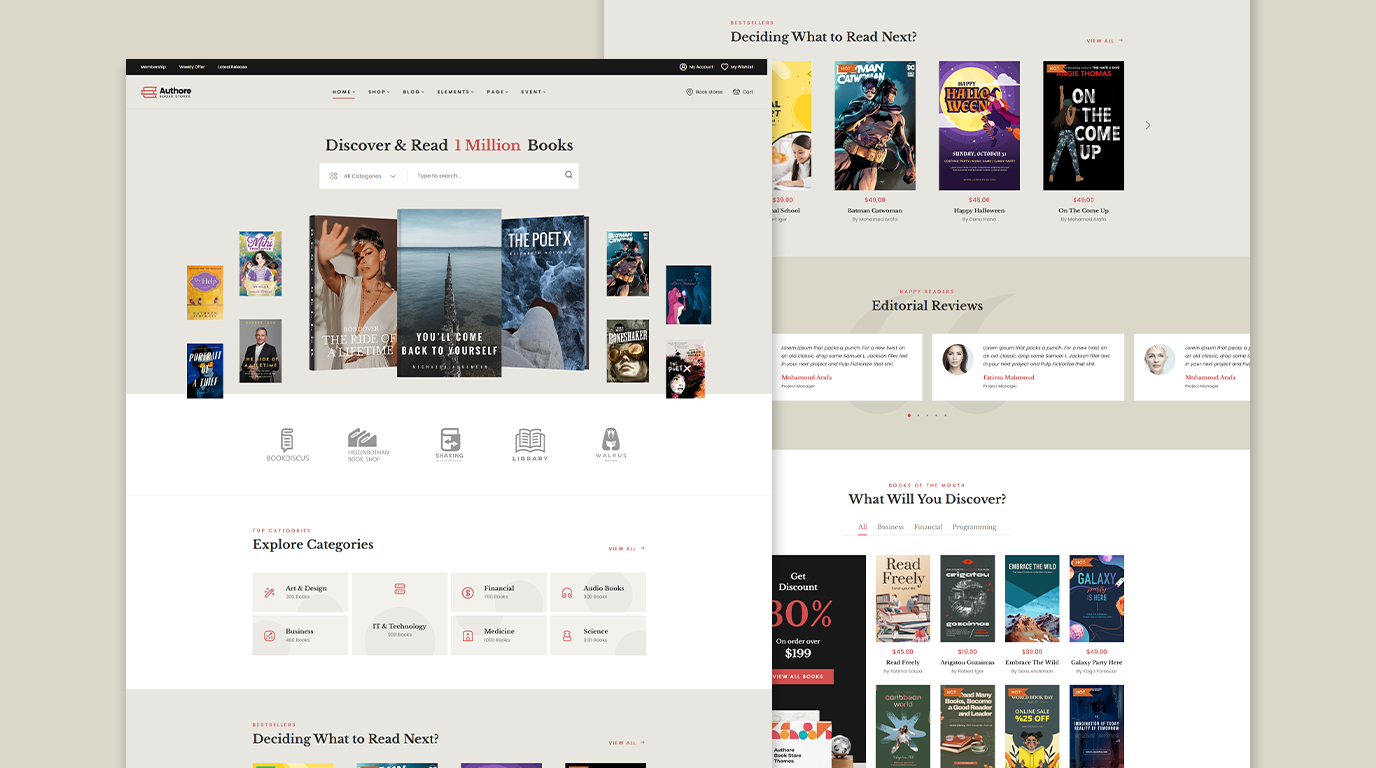
An author website needs seven core sections: a homepage that introduces you and your books, a books catalog with buy links, an about page, an email signup with a lead magnet, a press or media kit, a contact page, and optionally a blog. Together these sections turn your website from a static page into a reader-facing system that supports every launch.
1. Homepage — Your Author Identity in One Screen
Your homepage has one job: tell the right reader immediately that they are in the right place. That means your name, your genre, your most recent or flagship book, and a clear path forward — all visible before the reader scrolls.
- What your homepage should include: your author name in the title tag and H1 so search engines and readers both identify you correctly; a book cover or series visual above the fold; a brief one-to-two sentence statement of who you are and what you write; navigation to your books, about page, and email signup; and a clear primary CTA — typically 'See My Books' or 'Join My Reader List.'
- What to avoid: A wall of text about your writing journey before a cover is shown. A homepage that lists your social media icons instead of your books. Generic imagery with no books visible. These are the most common author homepage mistakes.
2. Books Page — Your Complete Catalog with Buy Links
Your books page is where readers go when they are ready to commit. Every book you have published should have its own dedicated page or a clear card on the books catalog page. Each entry should include:
- The book cover image (with alt text that includes the title and genre)
- The back cover blurb
- The buy links for every retailer you distribute through (Amazon, Barnes & Noble, Kobo, Apple Books)
- The series position if it is part of a series
- The genre and reading order
- Social proof — review quotes, starred review callouts, or recommendation badges
For series authors, a series landing page — a single page that presents the complete series in reading order with one-click access to each title — is more effective than a flat books list. Readers who land mid-series need to understand the reading order before they will buy.
3. About Page — Build the Human Connection
Your about page serves two audiences simultaneously: the reader who wants to know who wrote the book they just fell in love with, and the search engine (or AI assistant) that needs to establish who you are as an entity.
- For readers: A conversational biography that connects your life, background, or interests to the books you write. Keep it relevant to your genre — a thriller writer's former career in law enforcement is a credibility detail; their love of hiking is not.
- For search and AI: Your full author name, genre, publishing history, and location (if relevant) stated clearly in the first paragraph. Schema markup (Person/Author structured data) added to the page by your web developer confirms the entity data to search engines directly.
Avoid vague 'passionate author' copy with no concrete detail. A reader who lands on your about page wants to know you wrote something worth their time — give them evidence.
4. Email Signup — Your Most Valuable Author Asset
Social media platforms change their algorithms, reduce reach, and occasionally disappear. Your email list is the only reader relationship you own outright. An author website without a clear email signup mechanism is leaving its most valuable conversion opportunity unused.
- Effective email signup elements: A lead magnet (a free short story, a prequel chapter, a character guide, a reading list in your genre) that gives readers a specific reason to sign up.
- Form placement: An inline signup form placed in multiple locations (homepage above the fold, books page, about page sidebar).
- Dedicated page: A dedicated signup landing page with a clear promise about what subscribers receive.
Connect your signup to an email service provider — Mailchimp, ConvertKit, Flodesk, or Kit — so you own the list and can send directly to subscribers without platform intermediaries.
5. Press & Media Kit — Make It Easy to Feature You
A press kit page reduces friction for anyone who wants to feature you — podcasters, book bloggers, librarians, event organizers, and journalists. Without one, they have to email you for assets, and many will not bother.
Your press kit page should include:
- A downloadable high-resolution author photo
- A short bio (100 words) and long bio (300 words) available as a text download
- High-resolution book covers for download
- A brief list of interview topics or speaking points
- Your contact information for media inquiries
A press kit takes one afternoon to create and pays dividends every time someone features you without having to ask for assets.
6. Contact Page — Give Readers a Way to Reach You
A contact page is often overlooked by authors who assume their social media DMs are sufficient. They are not. Your contact page captures messages from readers, media inquiries, event requests, book club requests, and collaboration opportunities — all of which tend to be higher-intent and higher-value than social media interactions.
Keep your contact page simple: your name, a brief statement of what kinds of messages you welcome, a contact form with name, email, and message fields, and an honest response-time expectation. Do not publish your email address as plain text — form-based contact protects your inbox from spam.
7. Blog or Resources Section — Optional but Powerful for SEO
A blog is optional on an author website, but for authors who want long-term organic discoverability, it is the highest-leverage content investment available. A well-structured blog builds topical authority — the signal to search engines that your website is a credible source for your genre, subject matter, or craft.
- Effective author blog content includes: Genre deep-dives (what makes a great dark romance, the history of your fantasy world's magic system), craft and process posts (how you plot a series, your revision process), reading recommendations within your genre, and behind-the-scenes content that deepens reader connection.
- For non-fiction and self-help authors: A resource section — downloadable worksheets, curated reading lists, how-to guides — builds subject-matter authority and generates email signups simultaneously.
Common Author Website Mistakes to Avoid
- No books above the fold: Readers need to see covers immediately to confirm they are in the right place
- Missing buy links: Every book page should link to every retailer the book is available on
- No email signup: A website without a list-capture mechanism converts readers into visitors you cannot follow up with
- Out-of-date content: A website that still shows 'coming soon' for a book published two years ago damages credibility
- Mobile design not tested: Over 60% of book discovery happens on mobile devices
- Generic about page: 'I love writing and coffee' tells readers nothing useful about your books
DIY Website Builder vs. Done-for-You Author Website
You can build an author website yourself using Wix, Squarespace, or WordPress.com. The result can be functional. But getting all seven of these sections set up correctly, with proper email integration, SEO structure, and mobile optimization, takes 30–60 hours if you have no prior web experience — and the result will still be constrained by what the template allows.
BookFellaz builds custom author websites with all seven of these sections structured around your specific books, genre, and launch goals. Explore our Custom Author Website Design Services.
Frequently Asked Questions
How many pages does an author website need?
A functional author website needs at minimum five pages: Homepage, Books, About, Email Signup or Newsletter, and Contact. A Press/Media Kit page is recommended as soon as you begin doing any media or event appearances. A Blog is optional but valuable for long-term search visibility.
Should an author have a website before their first book is published?
Yes. An author website is a pre-launch asset — it gives you a place to build an email list, collect ARC reader signups, and establish a search-visible presence before your book releases. A simple 3-page launch site (Homepage, Coming Soon/Newsletter, Contact) built 2–3 months before your publication date is better than waiting until after launch.
What platform should an author use for their website?
Self-hosted WordPress gives you the most flexibility, SEO control, and file ownership. Squarespace is a viable middle-ground for authors who want a simpler management experience. Wix works for simple sites but has SEO limitations. Tertulia and BookBub author pages are useful supplements, not replacements for an owned author website.
Does an author website help sell books?
An author website supports book sales indirectly — by improving discoverability, building reader trust, growing your email list, and giving retailers a credible author page to link to. It does not replace the role of a compelling cover, blurb, and review presence. Think of it as the foundation that everything else builds on.
How often should an author update their website?
Update your website whenever you have something new: a new book, a new review quote, an upcoming event, a new press mention. Your Books page should always reflect your current catalog. Your homepage should reflect your most recent or most important title. A blog (if you have one) benefits from consistent publishing — at minimum once per month.
Ready to build your author presence?
Explore our packages or get in touch for custom book covers, websites, and trailers.