
How to Build an Author Website That Sells Books (Step-by-Step for Indie Authors)
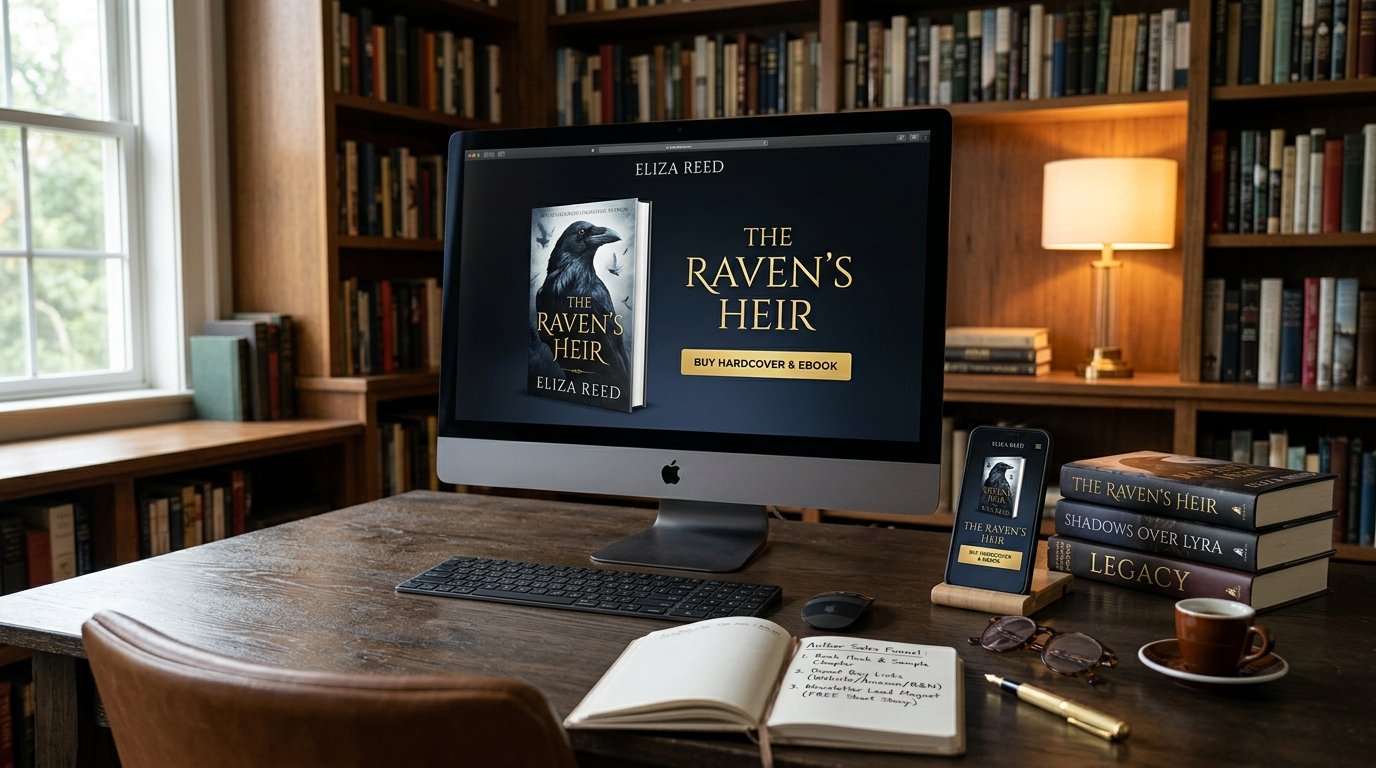
An author website that sells books needs five core elements: a compelling homepage with your book front and center, an email signup, a clear “where to buy” page, an author bio that builds trust, and on-page SEO so readers can find you on Google.
If you’re an indie or self-published author and your website isn’t moving copies, the problem usually isn’t the book. It’s the platform. Most author websites look like digital business cards: a photo, a paragraph bio, and a link to Amazon. That’s not a sales machine. It’s a missed opportunity.
This guide walks you through exactly how to build an author website that works: one that converts casual visitors into readers, builds your email list, and gives your book the professional presentation it deserves.
What Is an Author Website and Why Does Every Indie Author Need One?
An author website is your permanent, owned home base on the internet. Amazon author pages, social media profiles, and Goodreads are rented real estate. Your website is the one place you fully control.
For indie and self-published authors, a website does three things no other platform can:
- Captures email subscribers directly (your most valuable marketing asset)
- Ranks on Google so readers searching for books like yours find you organically
- Builds credibility that justifies a reader taking a chance on an unknown author
Without a website, you’re entirely dependent on algorithms you can’t control and platforms that can change their rules overnight.
Direct Answer: Do self-published authors need a website? Yes. Every indie author needs a website, even if they publish on Amazon KDP. Your website is the only platform you own, and it’s where email list growth, SEO, and direct sales all happen.
What Pages Should an Author Website Include?
A high-converting author website needs these core pages:
| Page | Purpose | Priority |
|---|---|---|
| Homepage | First impression: hook, book cover, CTA | Must-have |
| Books Page | All titles, buy links, descriptions | Must-have |
| About Page | Author bio, photo, credibility signals | Must-have |
| Contact Page | Press, media, reader emails | Must-have |
| Email Signup & Reader Magnet | List building | Must-have |
| Blog or News | SEO + reader engagement | Highly recommended |
| Events & Appearances | Speaking, book fairs, signings | If applicable |
| Press Kit | Media inquiries, ARCs, headshots | Recommended for launch |
The reader magnet page and the press kit are the pages most authors skip and later regret skipping. These are the two that generate action from people who aren’t ready to buy yet.
How to Design an Author Homepage That Converts
Your homepage has one job in the first three seconds: make a reader want to know more.
Step 1: Lead with your book cover
The cover is your most powerful visual asset. It should appear above the fold, visible without scrolling, on both desktop and mobile. This sounds obvious. Most author websites still bury the cover halfway down the page.
Step 2: Write a hook headline, not a bio
Your homepage headline should speak to what the reader gets, not who you are. Compare:
- Weak: “Welcome to the official website of Jane Doe, author.”
- Strong: “Dark, slow-burn romance for readers who want their hearts broken and put back together.”
Step 3: Pair the cover with a single, clear CTA
Every homepage needs one primary call-to-action button. Options that work:
- “Read Chapter One Free”
- “Get the Book on Amazon”
- “Join My Reader List”
Avoid having three buttons competing for attention. Pick one based on your current priority (launch, list growth, or direct sale).
Step 4: Add social proof immediately below
One or two short reader quotes or review snippets right below your hook build trust before a visitor decides whether to scroll further.
What Should an Author Bio Include?
Your About page is not a resume. It’s a trust-builder. Readers want to know who you are, why you write what you write, and whether they’d enjoy spending time in your stories.
A high-converting author bio does four things:
- Opens with what you write, not where you grew up: Lead with genre, tone, or the feeling your books create
- Shares one personal detail that connects to your work: Explain why this genre or these themes matter to you
- Includes a professional author photo: Use a clean, well-lit headshot instead of a vacation snapshot
- Ends with a soft CTA: Invite them to join your list, follow you, or read a sample chapter
Direct Answer: What should an indie author include in their bio? Your bio should open with your genre and writing style, include one personal detail that connects to your work, feature a professional headshot, and end with an invitation to join your email list or read a free chapter.
How Do I Get My Author Website Found on Google?
Author SEO is one of the most underused tools in indie publishing. Most authors set up a website and wait for readers to arrive. They don’t.
Here’s the baseline SEO setup every author website needs:
- Keyword Mapping: Target author name searches, book titles, and genre-specific terms (e.g., "dark romance books like Penelope Douglas").
- On-Page Structure: Use descriptive H1, H2, and H3 headings, title tags, and meta descriptions.
- Schema Markup: Implement Person and Book schema so Google and AI assistants understand who you are.
- Content Marketing: Publish regular blog posts to build topical authority in your genre over time.
How Does Book Cover Design Affect Your Website’s Performance?
Your book cover does double duty on your website: it’s both a design element and a sales signal.
A professional cover communicates one thing instantly: this book is worth taking seriously. An amateur cover, no matter how good the website design around it, can signal that the production quality of the story may match.
Studies consistently show readers do judge books by covers. On an author website, a strong cover:
- Reduces bounce rate on the homepage
- Increases click-throughs to buy pages
- Makes your social sharing images look professional when the site is linked
Direct Answer: Does book cover design affect author website sales? Yes. A professionally designed book cover reduces homepage bounce rates, improves click-throughs to purchase pages, and signals production quality to first-time readers visiting your site.
What Is the Author Presence Stack and Why Does It Matter?
Most author marketing advice treats website, cover, trailer, and SEO as separate projects. That’s the wrong approach.
The Author Presence Stack is a framework that designs all four elements together, so they reinforce each other:
| Layer | What It Does |
|---|---|
| Book Cover | Creates the visual identity and first impression |
| Author Website | Converts visitors into readers and subscribers |
| Book Trailer | Drives traffic and emotional engagement through video |
| Author SEO & Visibility | Ensures the right readers can find all of the above |
When these four elements are built around the same design language, tone, and reader target, everything performs better. Your website’s color palette matches your cover. Your trailer uses the same visual language as your website hero. Your SEO keywords inform what copy appears on every page.
An author website built without considering how it connects to the cover, trailer, and discoverability is an author website that underperforms.
How Much Does an Author Website Cost?
Here’s an honest breakdown of what author websites typically cost, so you can make an informed decision:
| Option | Typical Cost | Best For |
|---|---|---|
| DIY (Squarespace, Wix) | $16–$35/month + your time | Extreme budget constraint |
| Template + self-setup | $100–$400 one-time | Comfortable with tech |
| Professional design service | $500–$2,500+ | Authors serious about their platform |
| Full Author Presence Stack (cover + site + trailer + SEO) | Custom | Authors launching or relaunching |
The hidden cost of DIY is time: hours spent wrestling with templates, troubleshooting mobile layouts, and building pages that still don’t convert like a purpose-built author website.
Direct Answer: How much does an author website cost? Author websites range from $16/month for a DIY builder to $500–$2,500+ for professional design. Indie authors serious about book sales typically find professional design pays for itself through better conversion, email list growth, and long-term SEO performance.
Step-by-Step: How to Build Your Author Website
Follow these steps in order. Skipping steps, especially Step 5, is why most author websites don’t convert:
- Step 1: Define your reader first. Before you pick a platform or choose a color, write one sentence about your ideal reader: who they are, what genre they love, and what they want to feel when they read your books.
- Step 2: Choose your domain. Use your author name if available. If not, a slight variation is fine. Avoid long hyphenated domains.
- Step 3: Plan your pages. Using the list above, decide which pages you need at launch versus which you’ll add later. Minimum viable: Homepage, Books, About, Contact, Email Signup.
- Step 4: Create or commission your cover. Do not build your website before your cover is finalized. The cover sets the visual tone for everything else.
- Step 5: Write all copy before you design. This is where most authors go wrong. Copy-first, design-second. Write your homepage headline, about bio, and book descriptions before choosing colors or layouts.
- Step 6: Design with your reader in mind. Every design decision (fonts, colors, imagery) should feel appropriate for your genre. A horror novel website should feel different from a cozy mystery website.
- Step 7: Set up your email list and reader magnet. Choose an email platform (Mailchimp, ConvertKit, etc.) and create a reader magnet, such as a free short story, prequel chapter, or resource, to incentivize signups.
- Step 8: Optimize for SEO. Fill in every meta title, meta description, and image alt text before launch. These take 30 minutes and make a real difference.
- Step 9: Launch with a plan. Don’t just hit publish and wait. Have a launch plan: social announcement, email to existing contacts, author community post.
- Step 10: Track and improve. Install Google Analytics or a similar tool. Watch what pages readers visit, where they drop off, and which CTAs they click.
Frequently Asked Questions
Do indie authors need a website?
Yes. Every indie author needs a website. It’s the only platform you fully own, where you can build your email list, rank on Google, and make a direct sales case without competing with 20 other book recommendations. Social media and Amazon author pages are supplemental; your website is the foundation.
What is the best website platform for authors?
The best website platform for authors depends on your technical comfort and goals. WordPress gives the most SEO flexibility; Squarespace and Wix offer the easiest DIY experience. Authors prioritizing professional design and conversion often work with a service that builds a custom author website from scratch, designed specifically for book sales.
How many pages should an author website have?
At minimum, an author website needs five pages: Homepage, Books, About, Contact, and an Email Signup/Reader Magnet page. Adding a blog significantly improves SEO over time and is recommended for authors building a long-term platform.
Should my author website include a blog?
Yes, especially for SEO. A blog is how Google discovers new readers for you. Each post, such as genre recommendations, writing process posts, or book inspiration articles, is an indexed page that can rank for searches your ideal readers are already doing.
How do I get readers to join my email list from my website?
Offer a reader magnet: a free short story, prequel chapter, bonus scene, or exclusive content that gives a real reason to subscribe. Place your signup form prominently on your homepage, in the site footer, and on a dedicated landing page. A popup with your reader magnet offer, timed to appear after 30 seconds on the page, consistently outperforms static forms.
Does a book trailer help my author website?
Yes. Book trailers increase time-on-site, improve conversion on book pages, and give you shareable video content for social media that drives traffic back to your site. Trailers are most effective when designed with the same visual language as your cover and website, making them recognizable as part of a cohesive author brand.
What is the Author Presence Stack?
The Author Presence Stack is a framework that builds your book cover, author website, book trailer, and author SEO together using a unified visual identity, tone, and target reader profile. When all four elements are designed to reinforce each other, they perform significantly better than if each was built separately.
How long does it take to build a professional author website?
A professional author website typically takes 2–4 weeks to build, depending on how much copy and content the author provides upfront. When paired with a book cover design, trailer, and SEO setup as part of a full Author Presence Stack, the process runs concurrently to reduce total turnaround time.
Ready to build your author presence?
Explore our packages or get in touch for custom book covers, websites, and trailers.