
Author Website vs Amazon Author Page: Do You Need Both?
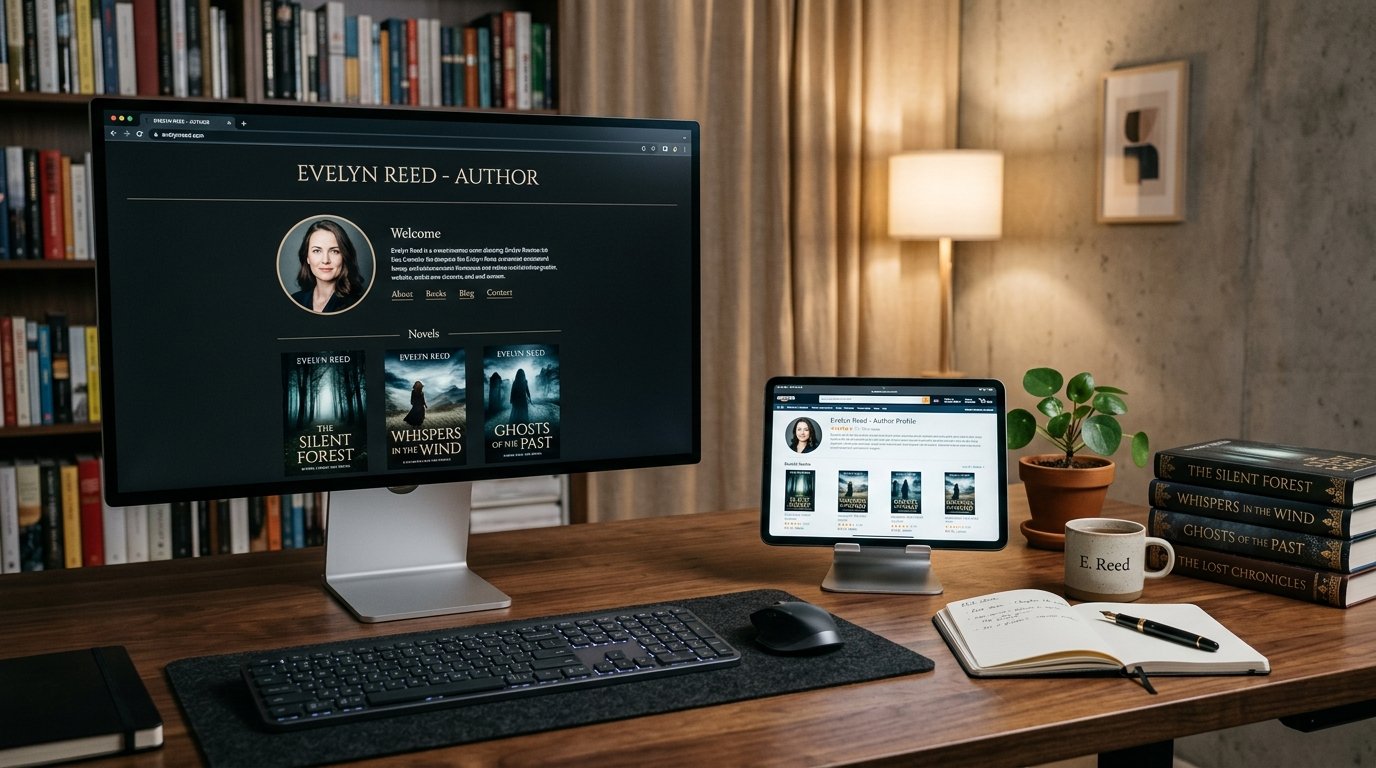
The short answer is yes. You need both. They do different jobs. Treating them as interchangeable is one of the most common mistakes indie authors make.
Your Amazon Author Page converts readers already browsing on Amazon into buyers. Your author website builds long-term reader relationships, an email list, and search visibility that Amazon cannot provide.
If you are a self-published author weighing an investment in author website design, this guide explains what each platform does, where each one falls short, and the priority at each stage of your writing career.
Author Website vs Amazon Author Page: The Short Answer
Amazon Author Central gives you a free templated page inside Amazon’s ecosystem. Setup is simple. Your books connect automatically. Your photo and bio appear in front of readers already browsing your titles.
An author website is your own property on the open web. It can rank on Google, capture email addresses, reflect your brand exactly as you envision it, and keep working even after Amazon policy changes.
Here is how the two compare across the features that matter most to an indie author:
| Feature | Amazon Author Page | Author Website |
|---|---|---|
| Email capture | No | Yes |
| SEO control | Very limited | Full control |
| Custom branding | Minimal | Complete |
| Analytics | Basic | Detailed (Google Analytics, etc.) |
| Cost | Free | $500–$5,000 to build; ~$100–$300/year hosting |
| Reader ownership | No (Amazon owns the relationship) | Yes (You own the list) |
| Google search visibility | Low | High (when optimized) |
| Direct sales option | No | Yes |
| Series and backlist showcase | Basic | Fully customizable |
| Newsletter integration | No | Yes |
The takeaway is not that one platform beats the other. Each fills a gap the other leaves open.
What an Amazon Author Page Does Well
Amazon Author Central is a genuinely useful tool. Every published author should claim and complete the page. Here is what it does reliably well:
It meets buyers where they already are
Amazon has hundreds of millions of active customer accounts. Readers browsing your genre are already there, credit cards connected, one click away from a purchase. Your Amazon Author Page places your photo, bio, and full catalog in front of them at the right moment: during active purchase consideration.
It links your entire catalog automatically
Once you claim Author Central, Amazon connects every book published under your name into a single profile. Readers discovering one title can immediately find the rest of your backlist with no extra work from you.
It adds social proof at the point of purchase
A well-written bio with a professional photo on your Amazon Author Page builds trust when a reader is deciding if they should try an author they have never read. A polished, complete page can shift that decision in your favor.
It is free and quick to set up
If you are early in your career with limited resources, claiming and completing your Amazon Author Page costs nothing. It takes a few hours to do well. After setup, maintenance is minimal.
What an Amazon Author Page Cannot Do
This is where the limitations matter. Amazon Author Central has real constraints. Those constraints affect any author relying on it exclusively:
You cannot capture email addresses
Amazon does not allow an email opt-in on your Author Page. Readers can follow you on Amazon for new-release notifications, but Amazon owns that relationship, not you. A change to follow notifications can reduce access to those readers overnight.
You have almost no SEO control
Amazon Author Pages have limited value for searches outside Amazon. Readers searching Google for your name, book series, or genre may not see the Author Page first. You cannot add custom title tags, write meta descriptions, structure content around specific keywords, or build the kind of search authority that drives consistent organic traffic to your work.
Branding is locked to a template
Every Amazon Author Page looks largely the same. You get a photo, bio, and book list. You cannot fully communicate the mood of your writing, the visual identity of your series, or the distinct voice separating you from millions of other authors on the platform.
Analytics are minimal
Amazon Author Central provides basic sales data. It does not offer the depth available from your own site. You cannot see how readers found you, what content they engaged with, which titles they viewed before buying, or where they dropped off. That behavioral data stays inside Amazon.
What an Author Website Does That Amazon Cannot
A well-built author website provides capabilities no third-party platform can fully replicate:
It builds a direct relationship with readers
Your author website is the one place online where you control the conversation. You choose the message, presentation, and next action. That action might be joining your email list, reading a sample chapter, buying directly, or spending time inside the world of your books.
It ranks on Google
When a reader searches "[your name] author" or "[your series name] books" on Google, your author website should appear first. A focused author SEO strategy can help the site rank for those searches and capture readers who may never discover you through Amazon’s internal search.
It works as a long-term author platform
Your author platform combines your website, email list, and online presence. It is the foundation of a sustainable writing career. Publishers, literary agents, podcast hosts, book clubs, and event organizers often review it before reaching out. It is your professional home on the internet. It signals commitment to your career.
It gives you complete control over your brand
If you write cozy mysteries, your site can feel warm, playful, and inviting. If you write dark psychological thrillers, it can feel tense and atmospheric. Multiple pen names or genres can use separate tailored experiences. Amazon cannot offer that degree of control.
Email List Ownership: The #1 Reason You Need Your Own Site
If there is one reason to build an author website, this is it.
Every email address on your list is a direct, unmediated line to a reader. No algorithm decides if your message gets seen. No platform fee reduces reach. No policy change can revoke access. When you release a new book, you send an email. Your readers hear about it directly.
Authors with even a few thousand engaged email subscribers can see launch conversion rates that paid advertising struggles to match. These readers asked to hear from you. They opened your email due to genuine interest.
Amazon’s follow system is not the same thing. It is a retailer notification, not a portable relationship you own. The platform can modify or discontinue it at any time.
The only way to build your own email list is through your author website with a properly integrated opt-in. Everything else is rented audience access on someone else’s platform.
SEO Control: Ranking for Your Name and Genre on Google
Search engine optimization for authors does not need to be complicated. It does require a property that Google can crawl, index, and rank. Amazon Author Pages do not give you full control over that property.
With your own author website design built on solid SEO foundations, you can:
- Rank for your own name: Readers searching for you land on your site, not a review aggregator or competitor page.
- Create content targeting your genre or subgenre: Attract readers searching for "best dark fantasy series" or "indie romance recommendations."
- Build topic authority over time: Each new page adds to overall search visibility.
- Connect your site to Google Search Console: See exactly which searches are bringing readers to you.
A well-optimized author website can double organic search traffic within six months for authors who have never invested in SEO before. That means readers arriving consistently at no additional cost each month.
Branding and Genre Consistency: The Author Presence Stack Argument
Successful indie authors think about their online presence as a stack: interconnected layers with a specific job for each piece.
At the top of the stack is your author website. It establishes tone, aesthetic, and message for everything else. Your Amazon Author Page, social profiles, newsletter header, and ad creative should feel like extensions of that central identity, not disconnected fragments.
When readers encounter your brand consistently across platforms, trust develops faster. They recognize your covers. They remember your name. They recommend you to other readers due to a clear, memorable identity.
A consistent author platform needs a central home base. Your author website is that hub. Amazon Author Central can be a useful spoke. It cannot anchor the entire system.
Cost Comparison: Amazon (Free) vs Author Website ($500 to $5,000)
The most common hesitation about building an author website is cost. Here is a clear breakdown:
Amazon Author Page
- Setup cost: Free
- Annual maintenance: Free
- What you get: A template page inside Amazon’s ecosystem with no email capture, limited SEO, and no branding flexibility.
Author Website: Your Options
- DIY with a website builder (Squarespace, Wix): $150–$300/year. Up-front cost is low. SEO structure, design flexibility, and email integration remain limited. Suitable for testing the idea; not ideal as a long-term solution for a serious author platform.
- Template-based custom site: $500–$1,500 one-time build cost, with $100–$200/year in hosting. Better than a DIY builder in many cases. Design can remain generic. SEO setup may be light.
- Professionally designed author website: $1,500–$5,000 depending on scope, with full SEO setup, custom genre-matched design, and email platform integration. Built to convert readers rather than simply look good. BookFellaz packages fall into this range. They are built specifically for indie and self-published authors seeking a professional result without hiring a large design agency.
The return on investment can be measurable. One launch email to a list of 2,000 readers converting at 5–8% on a $4.99 ebook generates roughly $500–$800 from a single send. A list built consistently through your website can pay for the site within the first year or two for authors using it actively.
The Verdict: What to Do at Each Author Stage
Not every author needs to do everything at once. Use this roadmap based on your current stage:
Just published your first book
Set up your Amazon Author Page immediately. It is free, takes a few hours, and adds professionalism to your book listing. A full author website may not be essential on day one, but start planning it early rather than waiting too long.
Published two or more books, working on your next
Now is the time to build your author website. You have enough material for a bio, backlist page, and series overview. You have a clear reason to grow an email list: announcing the next release to readers already familiar with your work. A well-structured self-published author website with an email opt-in is the priority at this stage.
Building a series or planning multiple releases per year
Your website should function as a full author platform now. Add SEO foundations, a lead magnet for list growth, content attracting organic search traffic, and visual branding tying covers to your broader online presence. This is the stage where a professionally built site can show a clear, measurable return.
Preparing for traditional publishing or querying agents
Most publishers and literary agents will search for you online before responding to a query letter. A strong author website with clear branding and professional design signals serious career intent. A missing or generic website can signal the opposite. Move quickly at this stage.
Frequently Asked Questions
Do I need an author website if I have an Amazon Author Page?
Yes. Amazon Author Pages are effective for converting readers already browsing your books on Amazon. They cannot capture email addresses, rank strongly on Google, reflect your branding fully, or build the direct reader relationship that supports a long-term career. Your author website and Amazon Author Page serve different purposes. You need both.
What can an author website do that Amazon cannot?
An author website can collect email addresses and build a reader list you own. It can rank on Google for your name, book series, and relevant genre keywords. It can reflect brand identity through custom design tailored to your genre and audience. It can host a blog, reader community, press page, and direct store. It can integrate with any email marketing platform, analytics tool, and social channel you choose. Amazon Author Central cannot provide the same level of flexibility.
Is an Amazon Author Page enough for indie authors?
For a brand-new author with one book or limited resources, an Amazon Author Page is a reasonable starting point. It is not sufficient for an author serious about building a sustainable career. The lack of email capture alone makes it a partial solution. Every reader who finds you on Amazon without joining a list you own may become difficult to reach again after algorithm or notification changes.
How much does it cost to have both an author website and Amazon page?
Your Amazon Author Page is free to set up and maintain. Your author website typically costs $500–$5,000 to build, depending on whether you use a DIY platform or hire professional support, with another $100–$300 per year for hosting and domain fees. BookFellaz packages are designed specifically for indie authors seeking a professionally built site at accessible pricing.
At what stage should an indie author build a website?
The best time is after publishing the first book during active work on the next. At that point, you have enough material for a real site: bio, book page, and series overview. You have a clear reason to start growing an email list. Waiting for a large backlist can mean losing years of reader-relationship building, email growth, and organic search visibility.
Ready to build your author presence?
Explore our packages or get in touch for custom book covers, websites, and trailers.